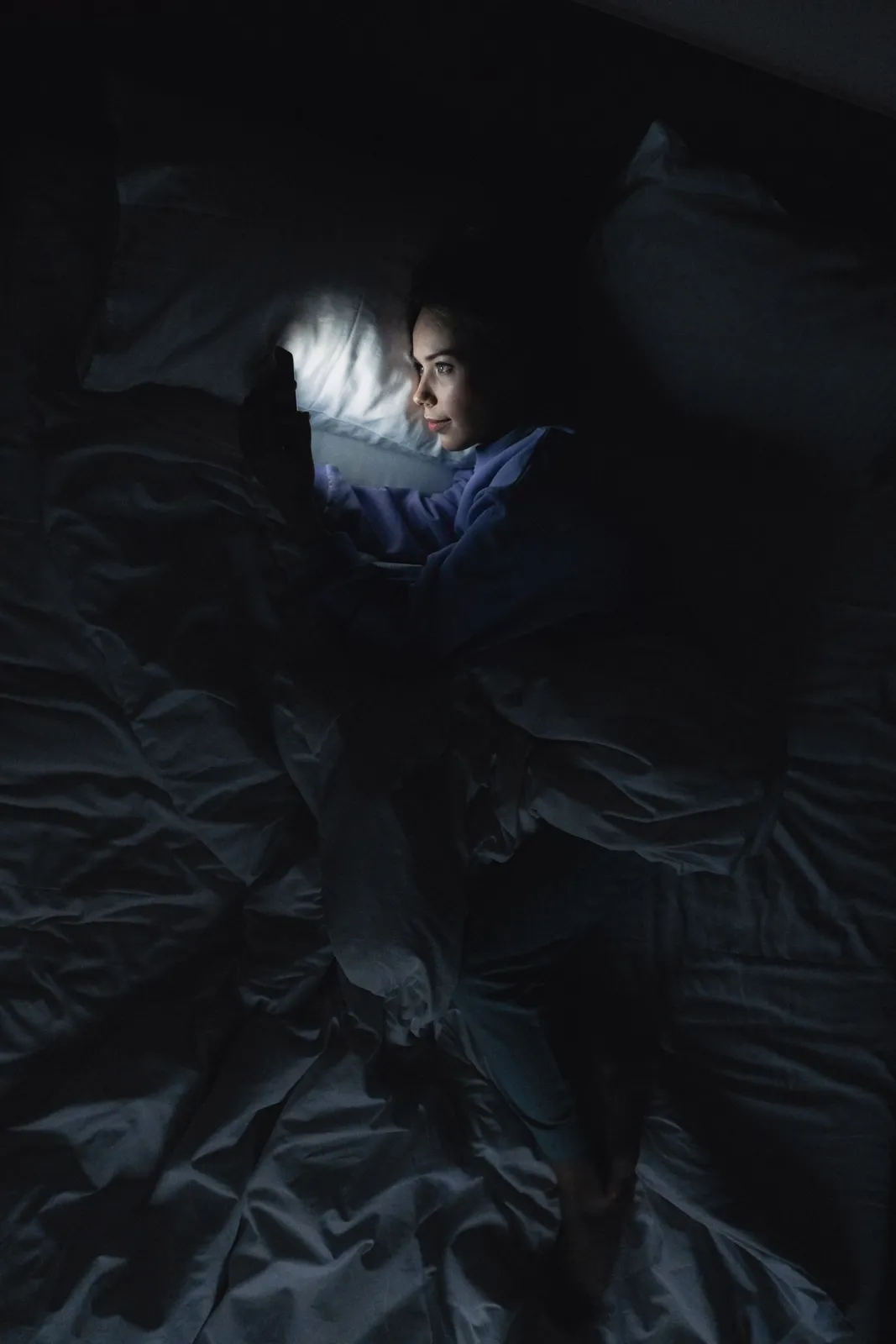
Few habits are as universal, or as quietly disruptive, as the last scroll before sleep. Phones, tablets, laptops and TVs are part of most people’s evenings, and for many they are the last thing they see before closing their eyes. You have probably heard that screens are bad for sleep, usually with blue light as the culprit. The real picture is more nuanced, and more useful.
This guide explains the different ways screens can affect sleep and REM sleep, what the evidence does and does not show, and a realistic plan that does not require throwing your phone in a lake.
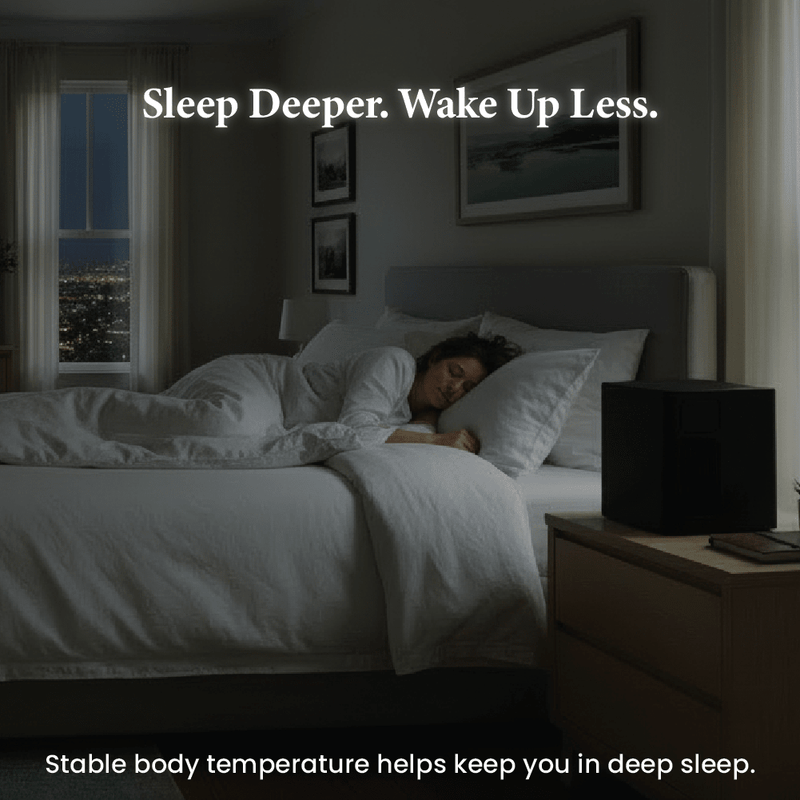
Good Sleep cooling and heating mattress topper
A water-based mattress topper that cools to 62°F and heats to 110°F and fits on top of the mattress you already have. Simple touch-panel control with no app, Wi-Fi or subscription. Dual zone on King.
Shop nowThree ways screens affect sleep
Screens can affect sleep through at least three different routes. It helps to separate them, because the fixes are different.
1. Light
Light is the main signal that sets your body clock. In the evening, darkness helps trigger the release of melatonin, a hormone that helps time sleep. Bright light at night, especially light rich in blue wavelengths, can suppress melatonin and nudge your body clock later.
However, the light from a phone held at normal brightness is much dimmer than daylight or bright room lighting. Research on how much a typical evening of phone use actually delays sleep has produced mixed results, and the effect for many people may be modest. Light still matters, but it may not be the biggest factor for everyone.
2. Stimulation
What you are doing on the screen may matter more than the light it emits. Social media, news, work email, messages and games are designed to grab attention and can raise arousal, the opposite of what you need to fall asleep. An upsetting news story or a stressful email at 11 p.m. can keep your mind busy long after you put the phone down.
3. Displacement
The simplest effect is time. “Just one more episode” or “five more minutes” of scrolling pushes bedtime later. If your wake-up time is fixed, that later bedtime directly shortens your night. Because REM sleep is concentrated in the final hours of sleep, a shorter night tends to cut REM first. See deep sleep vs REM sleep for why.
For many people, this displacement effect is the most important way screens cost them REM sleep.
Notifications and night-time waking
Phones can also interrupt sleep directly. Buzzes, pings and screen lights can cause brief awakenings, even ones you do not remember. Checking the phone when you wake at night can turn a short wake-up into a long one. Fragmented sleep can mean fewer complete sleep cycles, including fewer full REM periods.
Do night modes and blue-light glasses help?
Night mode or warm-color settings reduce blue light from the screen. Blue-light-blocking glasses aim to do the same. Research on whether these meaningfully improve sleep has been mixed, and reviews have generally not found strong evidence that blue-light glasses improve sleep for most people.
These tools are harmless and some people like them, but they do not address stimulation or displacement. A warm-tinted screen still lets you scroll until 1 a.m.
Screens and teenagers
Teenagers are especially vulnerable to screen-related sleep loss. Their body clocks naturally shift later in adolescence, and evening screen use can push bedtimes later still, while school start times stay early. The result is often chronic short sleep and reduced REM. Many pediatric experts recommend keeping devices out of children’s and teens’ bedrooms overnight. See REM sleep by age.
A realistic evening screen plan
Instead of an all-or-nothing rule, try these changes, ideally one or two at a time.
Set a “screens down” time
Pick a time, such as 30 to 60 minutes before bed, when you stop using interactive screens. Set an alarm on your phone as a reminder. Many phones also have a downtime or bedtime mode that dims the screen and limits apps.
Charge the phone outside the bedroom
This is one of the most effective changes for many people. If the phone is not within reach, you cannot scroll in bed or check it when you wake at night. Use an inexpensive alarm clock instead.
Use do-not-disturb overnight
If the phone must stay in the bedroom, turn on do-not-disturb with exceptions only for essential contacts. Put it face down and out of arm’s reach.
Choose calmer content late in the evening
If you do use screens in the evening, choose low-stakes content: a familiar show, a calm podcast, an audiobook or an e-reader with a dim warm setting. Avoid work email, news and social media in the last hour.
Dim the lights in general
Overhead lights, bright bathroom lights and screens all add up. Switching to lamps and dim warm lights in the last hour or two before bed supports your body’s natural wind-down.
Replace the habit
Scrolling often fills a need: relaxation, connection or a moment to yourself. Replace it with something that meets the same need, such as reading a paper book, stretching, a warm shower, journaling or talking with your partner.
What about falling asleep to TV?
Some people find it hard to sleep without background noise from the TV. The light and changing sound can disrupt sleep for others. If you rely on it, try a sleep timer so it turns off after 30 minutes, or switch to a consistent sound like white noise or a fan.
Screens and stress
Screens are often a way to switch off after a stressful day, but stimulating content can keep stress hormones and alertness high. If your evenings feel tense, a short wind-down routine away from screens can make a real difference. Read stress and REM sleep for more ideas.
Your bedroom as a sleep space
Keeping screens out of the bedroom is part of a broader idea: the bedroom should be associated with sleep. A cool, dark, quiet room with comfortable bedding supports longer, less interrupted sleep. Our sleep environment guide covers light, noise and temperature, and how sleep temperature affects REM sleep explains why temperature is worth getting right.
A one-week challenge
Try this for seven nights and see how you feel:
- Set a phone alarm 45 minutes before bedtime that says “screens down.”
- Charge the phone outside the bedroom or across the room.
- Use a regular alarm clock.
- Dim the lights after dinner.
- Spend the last half-hour reading, stretching or talking.
- Keep the same wake-up time all week.
Note your bedtime, how quickly you fall asleep and how rested you feel each morning. Many people find the biggest change is simply getting to bed on time.
When screens are not the problem
If you have cut back on screens and still struggle with sleep for weeks, other factors may be involved, such as stress, an irregular schedule, alcohol, caffeine, pain, or a sleep disorder like insomnia or sleep apnea. Talk to a doctor if poor sleep is affecting your daily life. Our guide on how to get more REM sleep is a good checklist to work through.
Why “revenge bedtime procrastination” happens
Many people stay up late on their phones not because they are not tired, but because the late evening is the only time that feels like their own. Researchers and journalists have used the phrase “revenge bedtime procrastination” to describe this pattern, especially among people with long work days or caregiving duties.
If that sounds familiar, the solution is not only a stricter rule about screens. It can help to protect a little personal time earlier in the evening, even 20 or 30 minutes, so the late-night scroll does not feel like the only reward of the day. Planning something you look forward to in the morning can also make an earlier bedtime feel less like a loss.
Screens in the morning
How you use screens in the morning matters too. Getting outdoor daylight soon after waking helps anchor your body clock, which makes it easier to feel sleepy at a reasonable time that night. If the first thing you do is scroll in a dark bedroom, you miss that signal. Try opening the curtains or stepping outside for a few minutes before checking your phone.
Work screens late at night
For many people, the most stimulating screen is not social media but the work laptop. Answering email in bed can keep your mind in problem-solving mode. If you must work in the evening, try to finish at least an hour before bed, write a short to-do list for tomorrow, and close the laptop somewhere outside the bedroom. That small ritual helps signal that the work day is over.
A cool, comfortable bed helps you stay asleep through the second half of the night. If you want to cool the bed rather than the whole room, take a look at this option.
Frequently asked questions
Does blue light reduce REM sleep?
Bright light at night can suppress melatonin and shift the body clock later, but evidence for a large effect from typical phone use is mixed. The bigger issue for REM is usually that screens push bedtime later and shorten the night.
Is reading on an e-reader better than a phone?
E-readers without backlights, or with dim warm settings, are generally less stimulating than phones because they lack notifications and endless feeds. A paper book is another good option.
How long before bed should I stop using my phone?
A common recommendation is 30 to 60 minutes. Start with what is realistic and build from there.
Do blue-light glasses improve sleep?
Research has not shown strong benefits for most people. They are unlikely to hurt, but they do not address the main ways screens affect sleep.
Is watching TV in bed bad for sleep?
It can be if it keeps you up later or the light and sound wake you. Using a sleep timer or moving TV time out of the bedroom can help.
Should I keep my phone in the bedroom as an alarm?
If possible, use a separate alarm clock and charge your phone elsewhere. If you need the phone nearby, use do-not-disturb and keep it out of arm’s reach.
Affiliate Disclosure: This article may contain affiliate links. We may earn a commission on purchases made through our links at no extra cost to you. Affiliate relationships do not influence our editorial assessments. Read our full disclosure policy.
Get More REM Sleep Editorial Team
Independent researchers covering the science of sleep quality. All content is reviewed against peer-reviewed research and updated quarterly.